Compounding Discipline: How It All Reinforces Itself
Why security, process, and planning don't work as well in isolation as they do together
Looking back across everything covered in this series, the through-line isn't any single technique: it's a way of approaching engineering work that treats quality, security, and reliability as properties you build in deliberately rather than properties you hope emerge on their own. That mindset shift is, in my experience, the real dividing line between organizations that handle security well and organizations that don't; it's rarely a difference in raw technical talent.
This series started with a case for why cybersecurity matters at all, then moved through four specific disciplines: input validation, vulnerability management, an organized development process, and project management. Taken individually, each one is a defensible, useful practice on its own. But something I've come to believe strongly, after years of watching both healthy and unhealthy engineering organizations up close, is that these disciplines don't just add up: they compound. Each one makes the others measurably more effective, and weakness in any one of them quietly undermines the value of the rest, even when those other practices look strong on paper.
This closing post is an attempt to connect the dots explicitly, because I think the interaction effects between these disciplines are actually more important, and more often overlooked, than any one of them individually.
Validation without process becomes inconsistent
Take input validation, covered earlier in this series, as an example. An individual engineer can understand the discipline deeply, write careful validation logic in their own code, and still work on a team where half the codebase has no validation at all, because there was never a process, such as a review checklist, a required static-analysis gate, or a shared validation library everyone is expected to use, that made that discipline apply consistently across the whole team rather than just to the parts one careful engineer happened to touch.
This is the first compounding relationship worth naming: a technical practice like input validation only becomes an organizational property, rather than an individual habit, once a process exists to enforce and propagate it. Without that process, the codebase's actual security posture depends entirely on which engineer wrote which file, which is precisely the kind of inconsistency that attackers are very good at finding and exploiting: they only need one unvalidated endpoint, not a majority of them.
A technical discipline only becomes an organizational property once a process exists to enforce and propagate it: otherwise it's just one engineer's habit.
It's worth being honest that building this connective tissue is genuinely harder than mastering any one discipline in isolation, precisely because it requires coordination across roles and teams that don't always report to the same leader or share the same immediate incentives. A security specialist and a project manager may both agree, in principle, that security review belongs in the project timeline, but making that agreement stick requires an ongoing working relationship, not a one-time memo. This is, in my experience, the real reason so many organizations have reasonably mature individual practices and still experience preventable incidents: not because any one team failed at their specific job, but because nobody owned the seams between the jobs, and the seams are exactly where the risk quietly accumulates.
Vulnerability management without planning becomes reactive
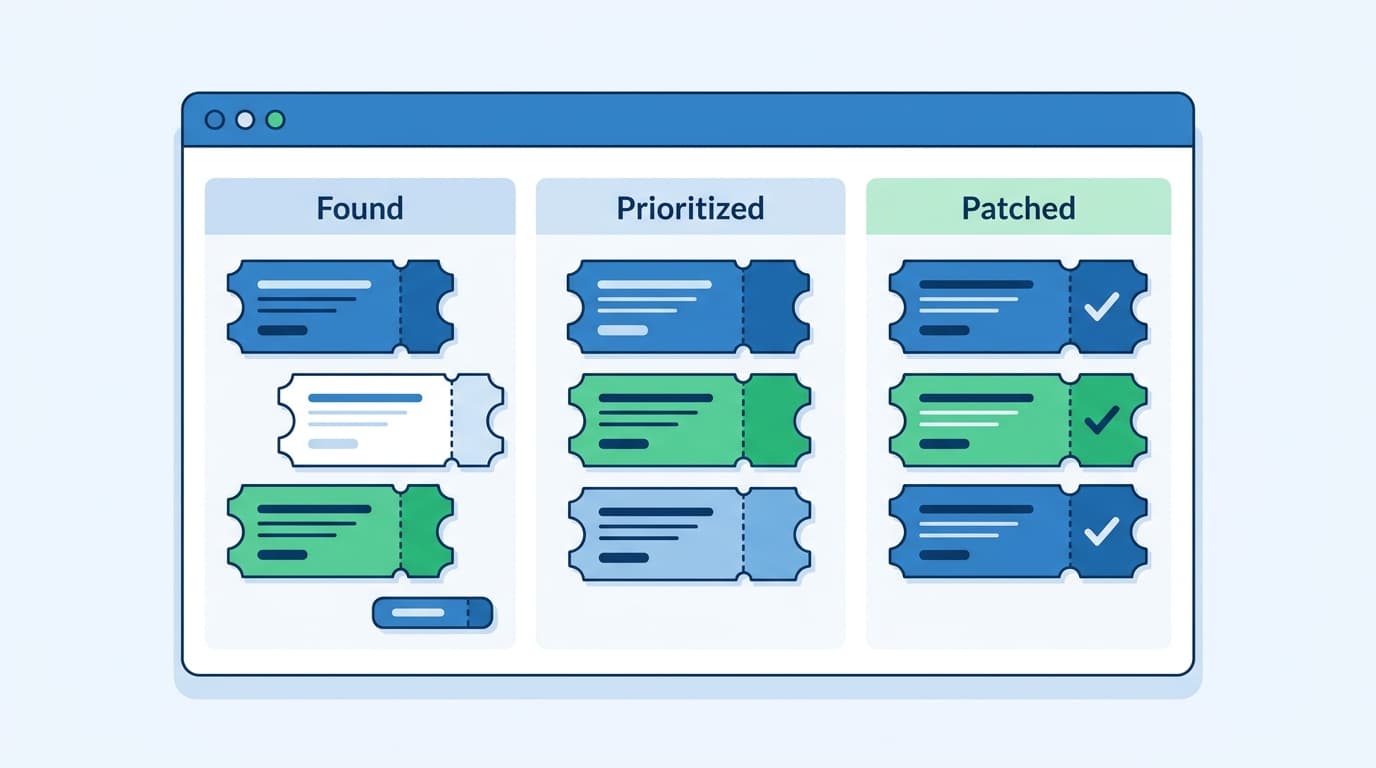
Vulnerability management, the second discipline covered in this series, has the same relationship with project management that input validation has with process. An organization can have excellent tooling for finding and prioritizing vulnerabilities and still patch slowly and inconsistently if patching work never gets a real slot on the project timeline, if it's treated as something engineers should squeeze in around their 'real' feature work rather than as scheduled, planned, resourced work in its own right.
The organizations I've seen handle this well build patching cadence directly into their planning cycles: a recurring, protected block of engineering time explicitly reserved for addressing prioritized vulnerabilities, tracked with the same visibility and accountability as any feature commitment. The organizations that handle it poorly treat patching as something that happens in the gaps between 'real' work, which in practice means it happens rarely, inconsistently, and usually only after something has already gone wrong. The technical discipline of vulnerability management and the planning discipline of project management aren't separate concerns: one determines whether the other actually gets executed.
Process without security awareness misses what matters
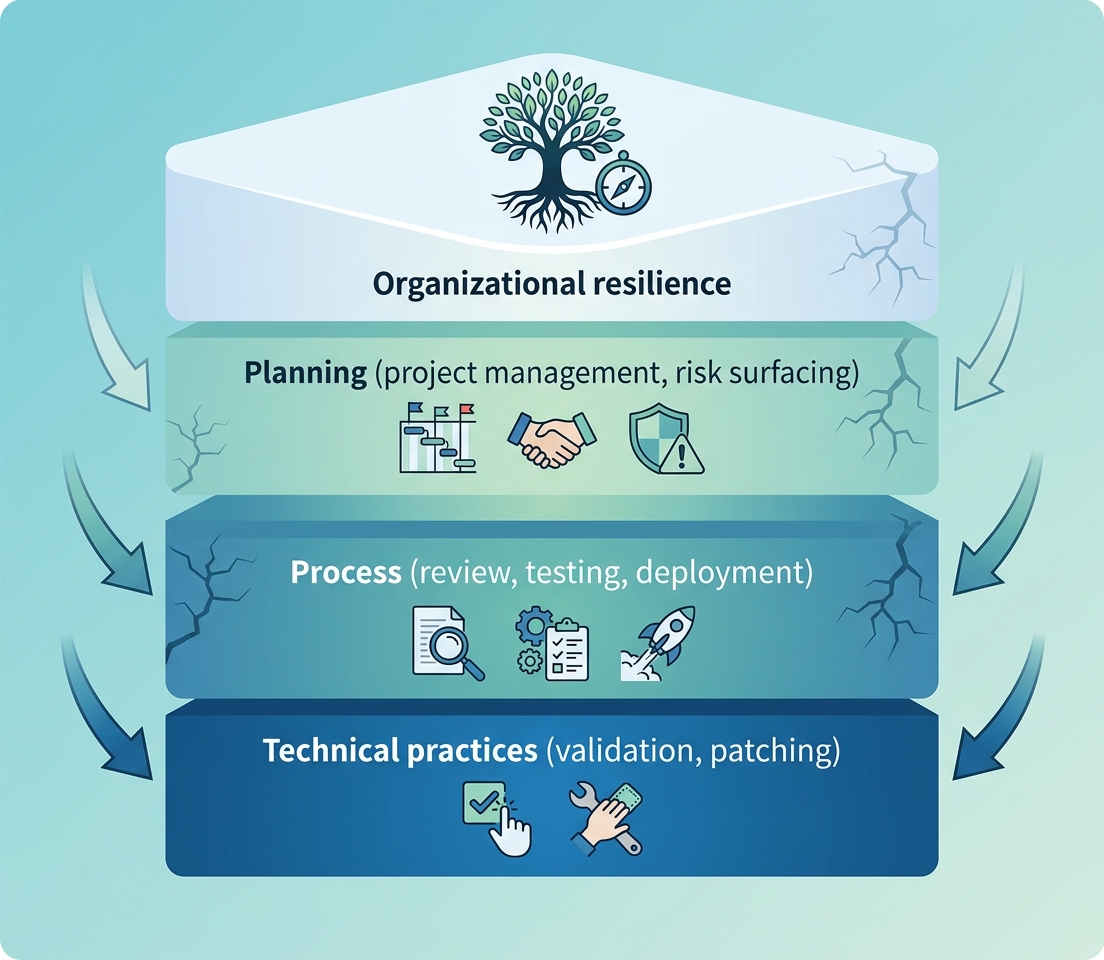
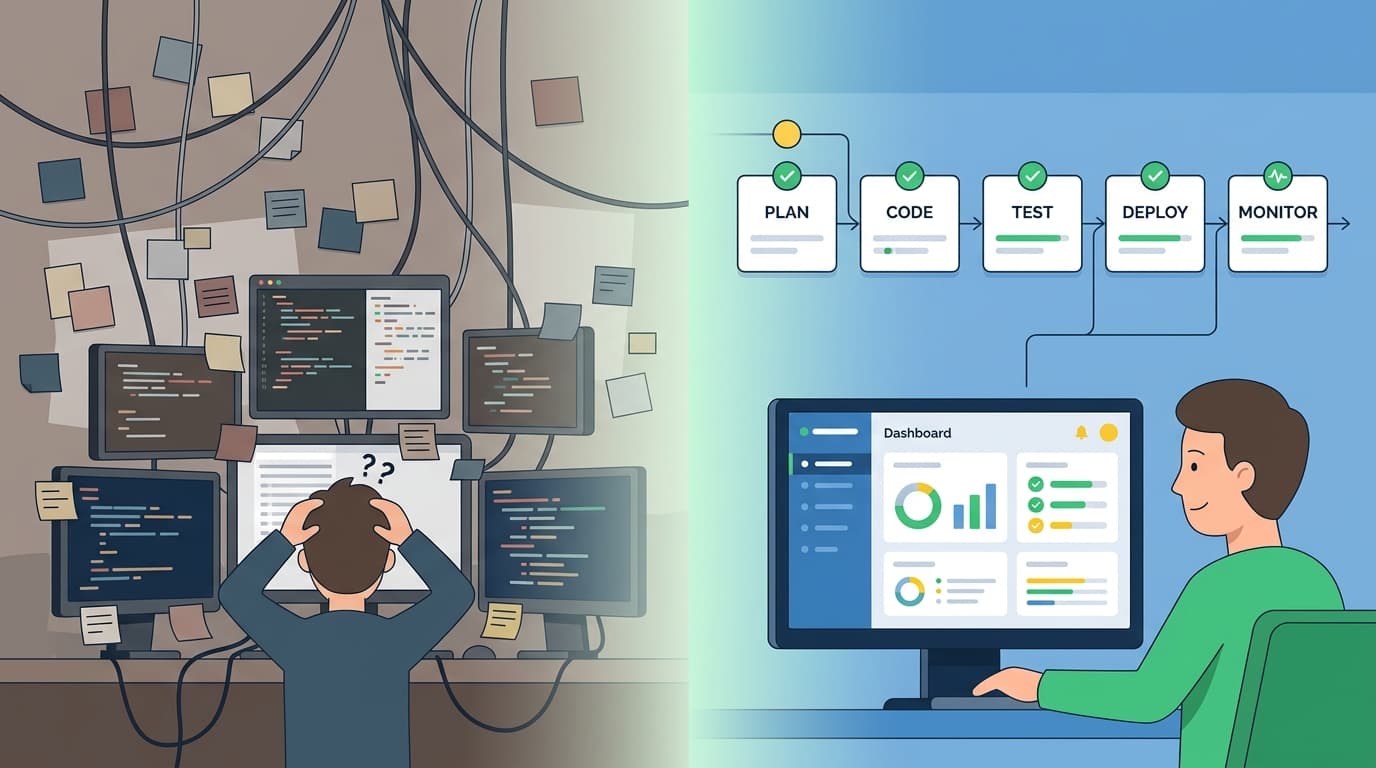
The relationship runs in the other direction too. A well-organized development process, including clear code review standards, consistent testing requirements, and a defined deployment pipeline, is genuinely valuable on its own, but it only catches what it's designed to look for. A rigorous review process staffed by reviewers who've never been trained to think about input validation, injection risks, or authorization boundaries will catch style issues, logic bugs, and readability problems very reliably, while consistently missing the security issues that matter most, simply because nobody involved in the process knew to look for them.
This is why the healthiest engineering cultures don't treat security as a separate review that happens alongside the 'real' process: they build security awareness into the existing process itself: security-aware checklist items in the standard code review template, security test cases alongside functional test cases, a security-minded question as a standard part of design review rather than a separate gate bolted on afterward. Process provides the structure; the disciplines discussed earlier in this series provide the substance that structure needs to actually be checking for. Neither one is sufficient alone.
- Input validation becomes consistent, organization-wide practice only when process enforces and propagates it, not left to individual habit
- Vulnerability management stays reactive and inconsistent unless project management gives patching a real, planned, protected slot
- A rigorous process without security-aware content only catches what it was designed to look for; structure needs the right substance
- Each discipline in this series makes the others more effective; weakness in one quietly undermines the value of the rest
A worked example of the compounding effect
It's easier to see this compounding effect concretely than abstractly. Imagine a team that has genuinely good input validation practices, a solid vulnerability scanning tool, a documented development process, and a competent project manager, four separate, reasonably mature disciplines, each staffed by people who know their craft. Now imagine that the validation standards live in a wiki page nobody reads during code review, the vulnerability scanner's findings go to a queue that only the security team monitors, the development process document was written two reorganizations ago and no longer matches how the team actually ships code, and the project manager tracks feature deadlines but has never seen the vulnerability queue or the validation wiki page at all.
Every individual discipline in that scenario would score reasonably well on its own merits if you evaluated it in isolation. And yet that organization would still ship insecure software, still patch slowly, still let untested code reach production, precisely because none of those four disciplines are actually talking to each other. This is the scenario I've seen play out, in some variation, more often than the opposite failure mode of an organization with no mature disciplines at all. Most organizations aren't missing the individual pieces. They're missing the deliberate work of connecting them, and that connective work is rarely anyone's explicit job description, which is exactly why it tends to fall through the cracks unless someone decides to own it on purpose.
What this means in practice
The practical takeaway from this whole series isn't a checklist of five things to implement independently. It's a recognition that these disciplines have to be built together, deliberately, as a connected system rather than five separate initiatives assigned to five separate owners who never talk to each other. A security team that writes excellent input-validation guidelines but never partners with the engineering process owners to actually embed that guidance into code review templates has written a document, not built a practice. A project management function that tracks feature deadlines meticulously but has no visibility into security review status is planning half the picture.
In my own experience, the moments where I've seen an engineering organization make the biggest jump in actual security maturity were never moments where one discipline suddenly got dramatically better in isolation. They were moments where two or three of these disciplines got connected for the first time: where security requirements started showing up directly in project timelines, where validation standards started showing up directly in review checklists, where vulnerability remediation started showing up directly in sprint planning instead of living in a separate spreadsheet nobody checked. The individual disciplines were often already reasonably mature. What changed was the connective tissue between them.
A rough maturity model for thinking about where you stand
It can help to have a rough way of assessing where an organization actually sits, rather than treating maturity as a single yes-or-no judgment. At the earliest stage, each discipline discussed in this series exists, if at all, only as individual knowledge: a particular engineer who cares about input validation, a particular manager who happens to track risk well, with no shared standard and no guarantee any of it survives that person leaving. At the next stage, individual disciplines become documented and somewhat standardized, but they still operate in isolation from each other: a security guideline exists, a project template exists, but nobody has connected them, and gaps still slip through in the space between them.
At a more mature stage, the connective tissue starts to form: security requirements appear as line items in project templates by default, validation standards are embedded directly into the tooling that enforces code review rather than living in a separate document, and vulnerability remediation has a standing, protected place in planning cycles rather than living in a spreadsheet nobody opens. At the most mature stage, this integration becomes invisible precisely because it's so complete: nobody has to remember to ask whether security was considered, because the process itself makes it nearly impossible to skip. Most organizations, in my experience, sit somewhere in the middle of this spectrum, with some disciplines more mature than others and inconsistent connective tissue between them. Recognizing honestly where you actually sit is a far more useful starting point than assuming either extreme.
Where to start if none of this exists yet
For a team or organization looking at this series and recognizing that little of it is currently in place, the instinct to fix everything simultaneously is understandable but usually counterproductive. Trying to stand up rigorous input validation standards, a mature vulnerability management program, a fully revised development process, and disciplined project risk management all at once tends to overwhelm a team's capacity to absorb change, and the result is often that all four efforts stall out partially finished rather than any one of them succeeding fully.
A more realistic starting point is to pick the single weakest link (whichever discipline, honestly assessed, is currently causing the most real pain or the most near-misses) and invest there first, deliberately building in the connective tissue to at least one adjacent discipline as part of that initial effort rather than treating it as a fully isolated fix. If patching has been the recurring source of pain, start there, but make sure the fix includes giving remediation a real, protected slot in the planning process, not just better scanning tools. If reviews have been inconsistent, start there, but build security-aware criteria into the review template from day one rather than adding them as a separate initiative later. Small, connected improvements compound in exactly the way this post has described; large, disconnected initiatives tend to stall. Start small, start connected, and let the compounding effect this series has described do the rest of the work over time.
Closing thought
Cybersecurity, done well, isn't a department, a tool, or a checklist you complete once. It's a property that emerges from how an organization plans its work, structures its review, validates its inputs, and manages the vulnerabilities that inevitably show up in software built by humans. None of the individual practices covered in this series are exotic or difficult to understand in isolation. What's genuinely difficult, and genuinely valuable, is building the discipline to connect them: consistently, across an entire team, for long enough that the connection becomes the default way the organization works rather than a project someone once championed and then moved on from.
That's the case I wanted to make across these six posts: not that any single practice is a silver bullet, but that the compounding effect of doing all of them together, deliberately, is where real organizational resilience actually comes from. Thanks for following along through this series.
Related posts
The Overlooked Power of Project Management in Engineering
Why the discipline that keeps a project organized is, quietly, also a security and quality discipline

Why Cybersecurity Actually Matters
Beyond the headlines: what's really at stake, and why it's everyone's job, not just the security team's
The Discipline of Input Validation
Why trusting input is how systems break, and why validation is the cheapest security control you'll ever implement
Vulnerability Management: Find It, Prioritize It, Patch It
A practical look at the unglamorous discipline that decides whether known flaws get fixed before or after they're exploited
Why Process Beats Heroics in Software Development
An organized development process isn't bureaucracy; it's what keeps quality and security from depending on any one person's memory
Comments
No comments yet. Be the first.