The Discipline of Input Validation
Why trusting input is how systems break, and why validation is the cheapest security control you'll ever implement
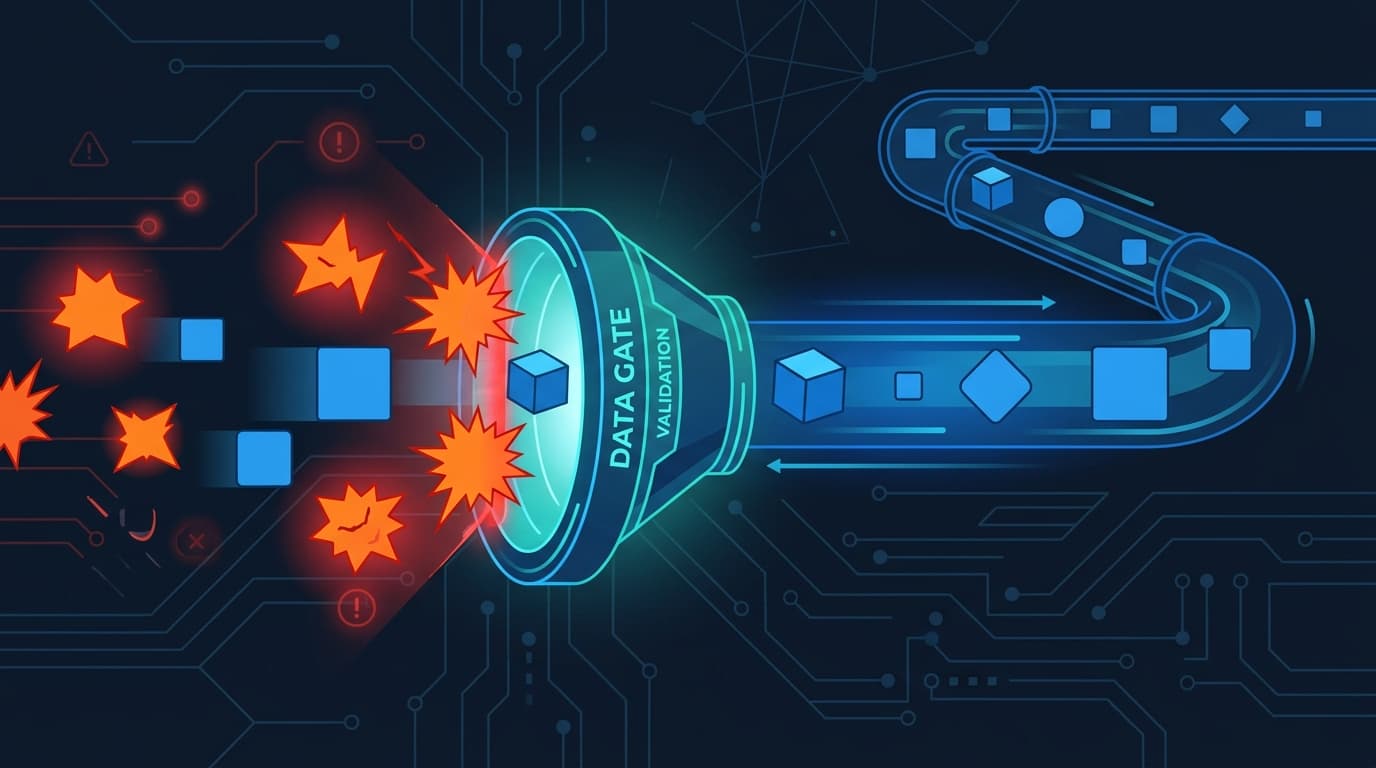
If you asked security researchers to name the single most common root cause behind decades of software vulnerabilities, a huge number would point to the same underlying pattern: a system trusted data it should have questioned. Not a sophisticated zero-day, not a nation-state exploit chain, just a piece of input that was allowed to do more than it should have been able to do, because nothing stood between it and the code that processed it. Input validation is the discipline of closing that gap, and it remains, by a wide margin, one of the highest-leverage security practices available to anyone who writes software.
What makes this topic worth an entire post, rather than a bullet point in a longer list, is how consistently it gets underestimated. It sounds almost too simple to be important: check that the data coming in is what you expect before you act on it. But the history of computer security is, in large part, a history of exactly that simple discipline being skipped, under time pressure, by well-meaning engineers who assumed the input would behave.
What input validation actually means
At its core, input validation is the practice of verifying that any data entering a system, whether from a user, a file, another service, a network request, or anywhere else outside the trust boundary of the code currently running, conforms to exactly what that code expects before it's used. That includes type (is this actually a number when a number was expected?), format (does this string match the shape of an email address, a date, a device identifier?), length (is this within a sane bound, or is someone sending ten megabytes into a field meant for a username?), and range (is this value within the bounds that make sense for what it represents?).
A useful mental model is to treat every piece of incoming data as guilty until proven innocent, rather than innocent until proven guilty. That inversion sounds pedantic, but it changes how code actually gets written. Code written under an 'innocent until proven guilty' assumption processes data first and only reacts if something obviously breaks downstream. Code written under a 'guilty until proven innocent' assumption checks the data's shape, bounds, and type before it's ever allowed near the logic that acts on it, and rejects anything that doesn't clear that bar outright, with no partial or best-effort processing of data that didn't fully validate.
It's worth being precise about what validation is not. It is not the same as sanitization, which modifies input to make it safer (stripping characters, escaping special sequences) rather than rejecting what doesn't conform. It is not the same as authentication or authorization, which answer 'who is this' and 'what are they allowed to do,' not 'is this specific piece of data well-formed.' And it is not something that can be done once, in one place, and considered finished, because input rarely enters a system through only one door.
A huge share of software vulnerabilities trace back to the same root cause: a system trusted data it should have questioned.
It's also worth being honest about why validation gets skipped even by engineers who know better: it genuinely does slow down initial development. Writing the happy-path version of a feature is almost always faster than writing the version that also handles every malformed, oversized, or out-of-range input gracefully. Under a tight deadline, that difference in speed is exactly the kind of trade-off that gets made silently, with the intention of 'coming back to add validation later'; a plan that, in my experience, succeeds far less often than the engineer making it genuinely believes it will, because there's rarely a natural moment later where that unglamorous cleanup work rises to the top of a backlog full of new feature requests.
Why this specific failure mode is so persistent
If input validation is this well understood, why does it keep causing incidents? Part of the answer is structural: validation is tedious, unglamorous work that rarely shows up as a feature anyone celebrates. Nobody demos 'we now reject malformed input' in a product review. It's the kind of work that only becomes visible when it's missing, which makes it a natural candidate for deprioritization under deadline pressure. The cost of skipping it is deferred and probabilistic, maybe nothing bad happens for months, while the cost of doing it properly is immediate and certain: more code, more edge cases to think through, more time.
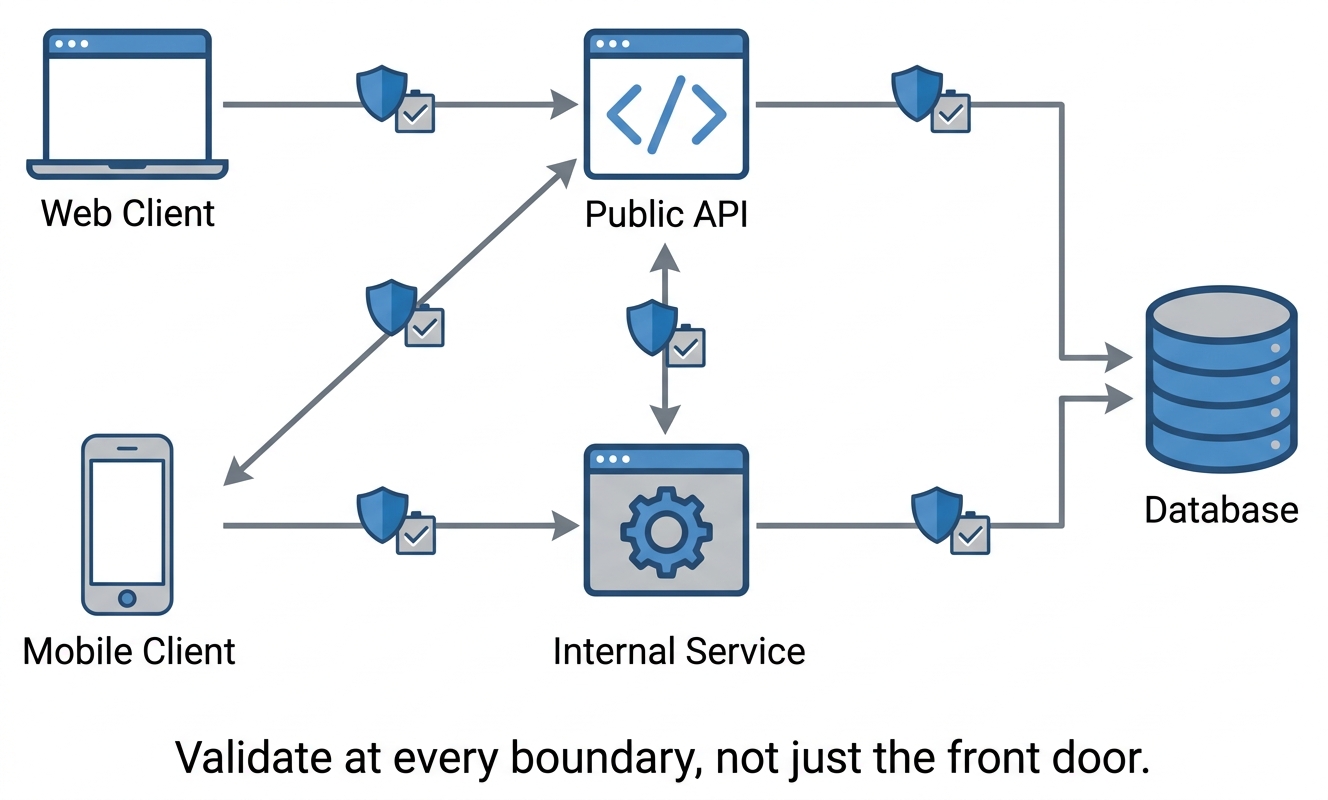
Another part of the answer is that validation has to happen at every trust boundary, and modern systems have a lot of them. Data enters through a web form, through an API endpoint another team owns, through a file upload, through a message queue, through a third-party webhook, through a mobile app that a different codebase built entirely. Validating input rigorously at the user-facing form and then trusting it implicitly everywhere downstream is a common and dangerous simplification, because that data will very likely get consumed by other code paths that never saw the original, validated entry point. Defense has to be layered: validate at every boundary the data crosses, not just the first one.
The classic failure modes worth knowing by name
A short tour of the most common consequences of missing or weak input validation is useful, not as an exhaustive security course, but as a reminder of how much downstream damage traces back to this one root cause. Injection attacks, such as SQL injection, command injection, and their many relatives, happen when unvalidated input is concatenated directly into a query or command, letting an attacker's data reshape the logic the system executes. Buffer and memory-related vulnerabilities, still a major category in lower-level languages, often stem from input whose size or shape wasn't checked before it was copied into fixed memory. Business-logic abuse, such as negative quantities in a shopping cart, out-of-range discount codes, or requests for a resource ID that shouldn't be reachable by that user, is a quieter but equally real category, where the 'invalid' input isn't malformed at the byte level, it's just outside the range of values the business logic was ever designed to handle safely.
What ties these together is not the specific mechanism of each exploit but the shared root cause: code that acted on data before confirming that data was safe to act on. This is exactly why input validation earns a place at the top of any serious discussion of secure development practice: it's not one control among many, it's the control that, when missing, tends to make every other defense downstream irrelevant.
- Validate type, format, length, and range, every time, at every boundary the data crosses
- Treat validation and sanitization as distinct: reject what doesn't conform rather than silently reshaping it wherever possible
- Never trust that a value was already validated upstream; validate again at each new trust boundary
- Favor allow-lists (explicitly permitted values or patterns) over deny-lists (blocking known-bad patterns), since deny-lists are inherently incomplete
Client-side checks are a courtesy, not a control
A specific confusion worth clearing up, because it causes real incidents on its own: validating input in a browser or mobile app's user interface is worth doing, but it is not a security control. Client-side validation exists to give users fast, friendly feedback: catching a malformed email address before a form even submits, greying out a button until required fields are filled in. It runs on a device the user fully controls, which means any determined actor can bypass it entirely, whether by disabling JavaScript, by intercepting and modifying the request with a proxy tool, or simply by calling the underlying API directly instead of going through the interface at all.
I've seen teams treat a client-side check as if it closes the loop, and then be genuinely surprised when a penetration test or a real attacker submits a request that never should have been possible according to the form's own rules. The rule here is simple and worth committing to memory: every validation rule that matters for security has to be enforced again on the server, or in whatever backend service ultimately processes the data, regardless of what checks already ran on the client. Client-side validation is a courtesy for legitimate users. Server-side validation is the actual control.
Validation in a world of typed languages and schemas
Modern tooling has made rigorous validation considerably easier than it used to be, and it's worth naming the tools that help, because relying on hand-written, ad hoc checks scattered through a codebase is exactly the inconsistency that causes gaps. Statically typed languages catch an entire category of type-mismatch errors before code even runs, simply by refusing to compile code that passes the wrong shape of data into a function. Schema-validation libraries let a team define, once, exactly what a valid request or data object looks like, including required fields, allowed value ranges, and string patterns, and then enforce that definition automatically at every entry point that uses it, rather than trusting every engineer to remember and re-implement the same rules by hand.
API frameworks increasingly build this in by default: define a schema for what a request should look like, and the framework rejects anything that doesn't match before your own application code ever sees it. This shifts validation from being a discipline an individual engineer has to remember to practice, to being infrastructure the whole team benefits from automatically. It doesn't eliminate the need to think carefully about edge cases; a schema can confirm a field is a string of the right length while still missing a business-logic constraint like 'this discount percentage should never exceed fifty.' But it removes an enormous amount of the tedious, error-prone work of checking basic shape and type by hand, which is exactly the kind of work most likely to get skipped when a team is under deadline pressure.
Making validation a default, not a decision
The organizations and engineers who handle this well tend to share one trait: they've made rigorous input validation the path of least resistance, not an extra step someone has to remember. That usually means investing in shared validation libraries or frameworks that make the correct behavior the easy behavior, such as a schema-based validator that a whole team uses consistently, rather than each engineer hand-rolling their own checks with varying levels of rigor. It means treating a missing validation check the same way a team would treat a missing test: a gap to close before code ships, not an optional nice-to-have.
It also means building the habit of thinking adversarially about your own inputs, even when there's no reason to suspect malice. What's the largest value this field could reasonably receive? What happens if this string is empty instead of populated? What happens if this array has zero elements, or a million? These aren't security questions in the dramatic sense; they're basic engineering questions that happen to have massive security implications, which is exactly why input validation belongs as much in a code review checklist as in a security audit.
Of all the disciplines covered in this series, input validation might be the one with the best ratio of effort to payoff. It doesn't require exotic tooling, specialized security training, or a dedicated team. It requires a habit, checking what comes in, every time, at every boundary, practiced consistently enough that it stops feeling like an extra step and starts feeling like how code is simply written. That shift, more than any single tool or framework, is what separates systems that hold up under real-world abuse from ones that don't.
Coming up next: Vulnerability Management: how to actually find, prioritize, and patch the flaws that do get through, before someone else finds them first.
Related posts
Compounding Discipline: How It All Reinforces Itself
Why security, process, and planning don't work as well in isolation as they do together
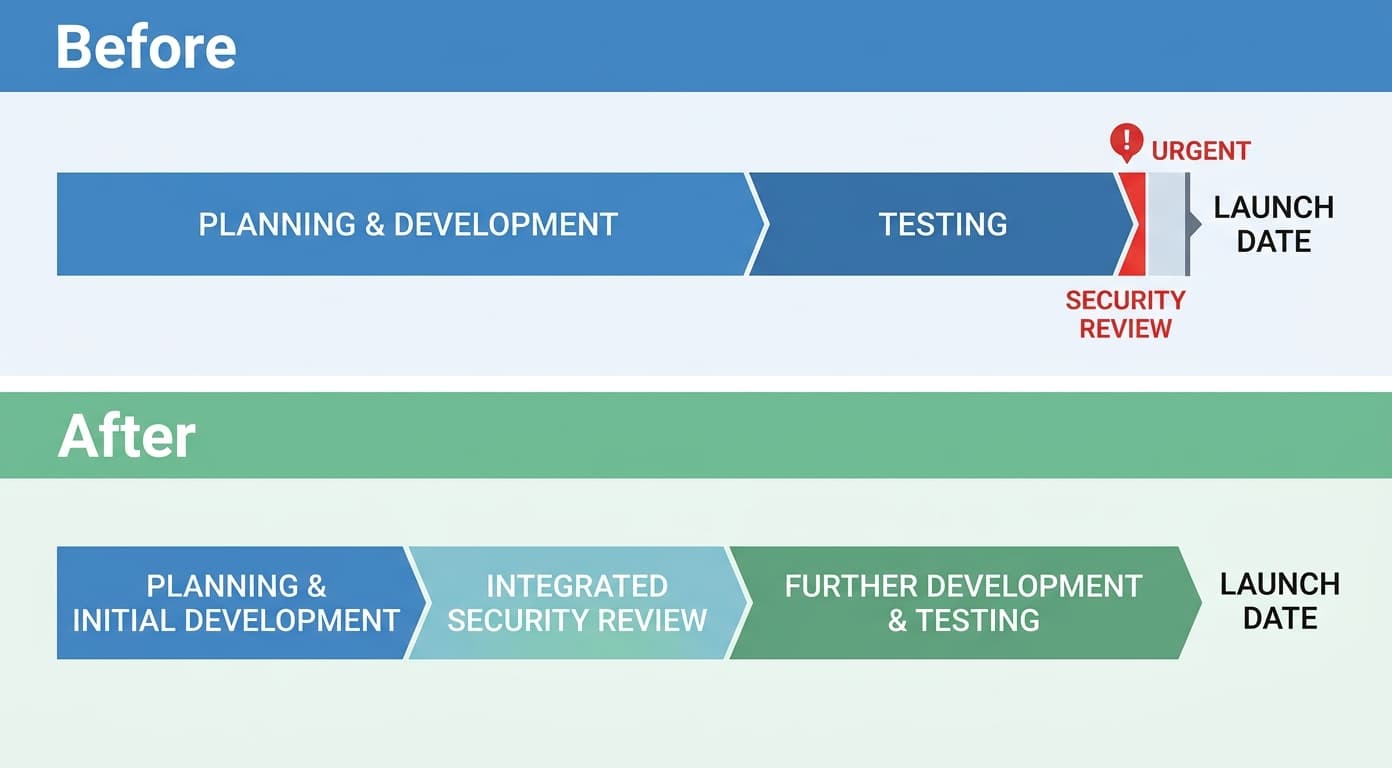
The Overlooked Power of Project Management in Engineering
Why the discipline that keeps a project organized is, quietly, also a security and quality discipline

Why Cybersecurity Actually Matters
Beyond the headlines: what's really at stake, and why it's everyone's job, not just the security team's
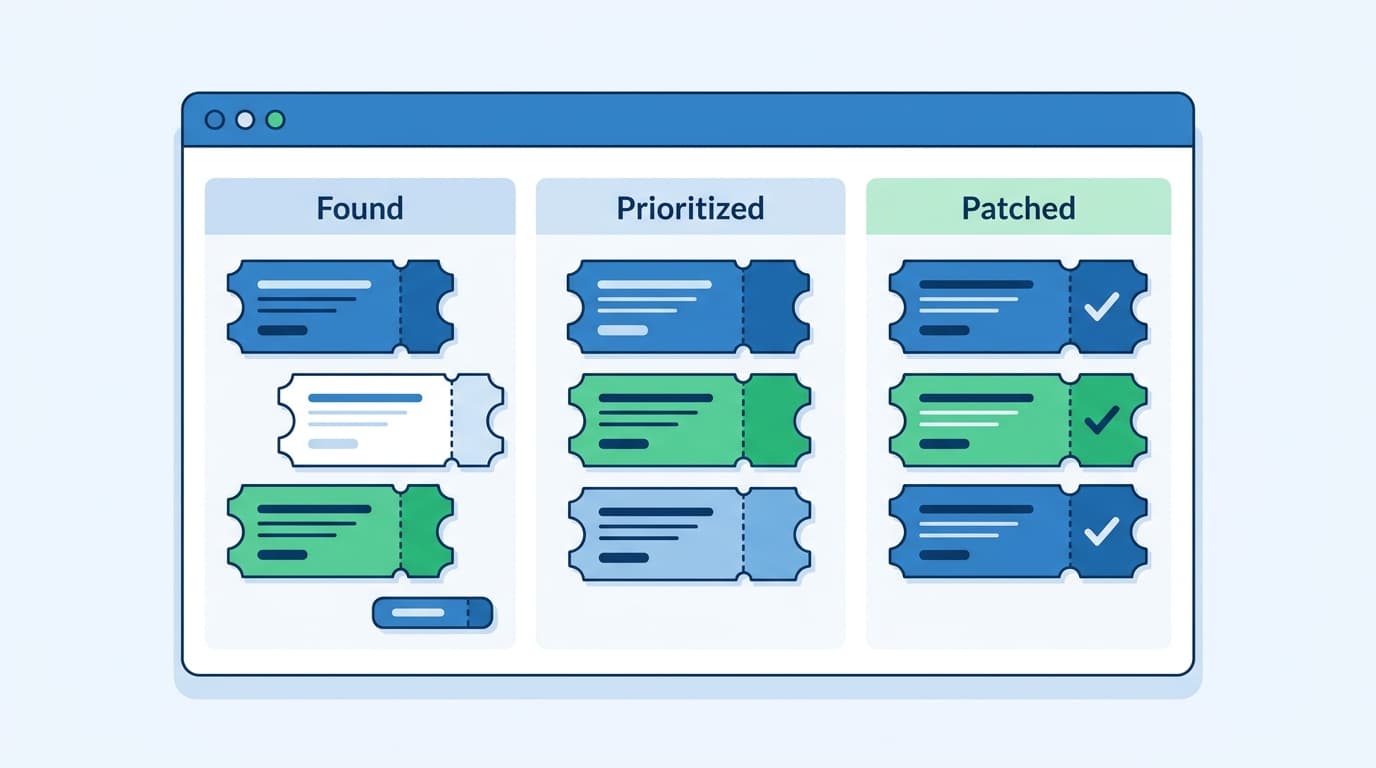
Vulnerability Management: Find It, Prioritize It, Patch It
A practical look at the unglamorous discipline that decides whether known flaws get fixed before or after they're exploited
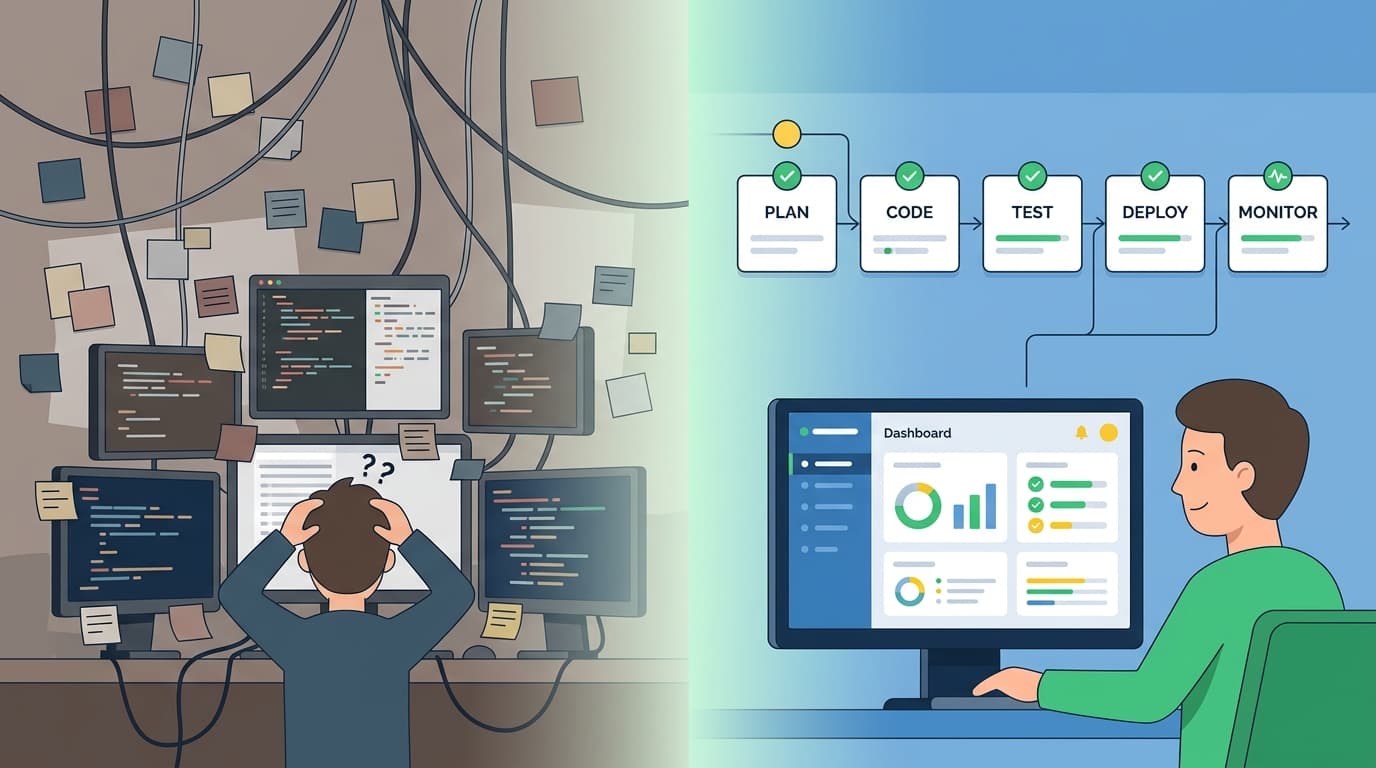
Why Process Beats Heroics in Software Development
An organized development process isn't bureaucracy; it's what keeps quality and security from depending on any one person's memory
Comments
No comments yet. Be the first.