Why Process Beats Heroics in Software Development
An organized development process isn't bureaucracy; it's what keeps quality and security from depending on any one person's memory
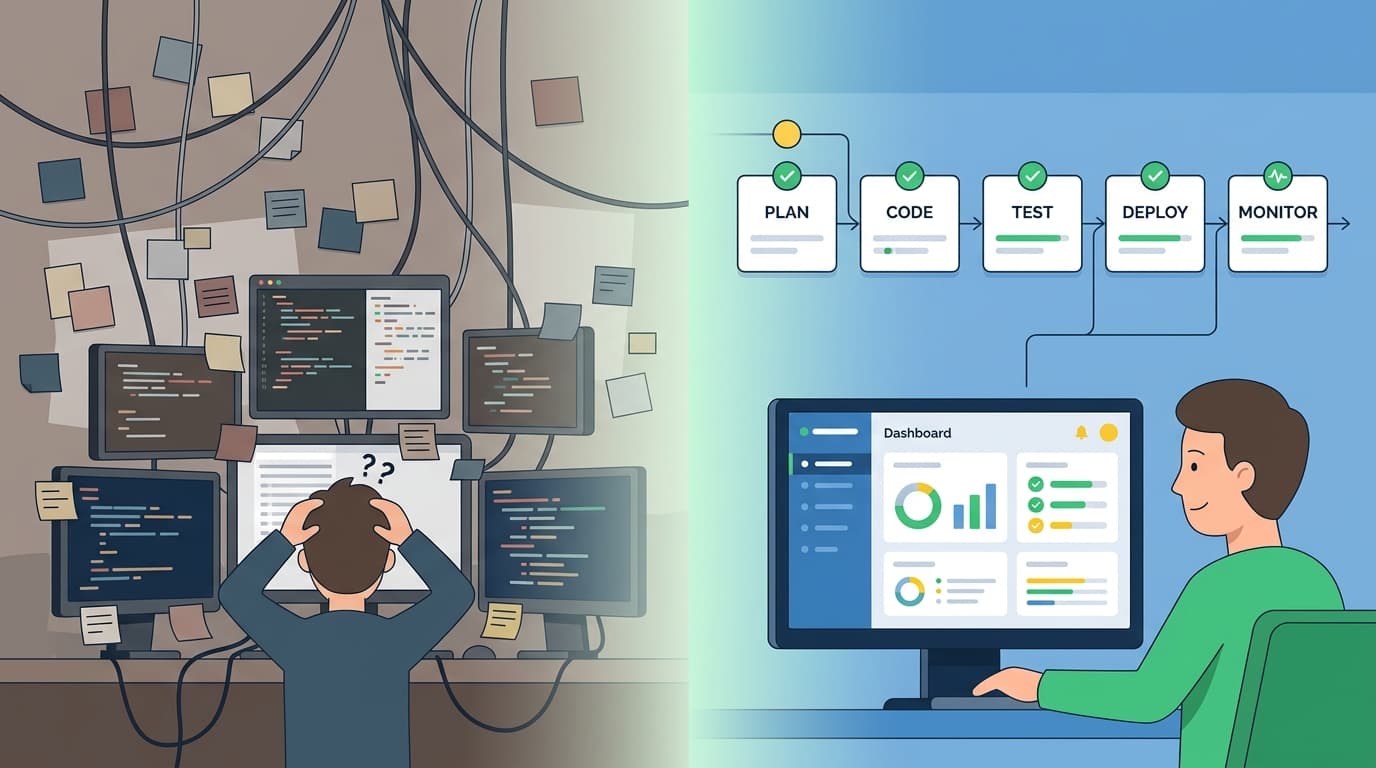
Every engineer has worked with, or been, the person who saves the project through sheer force of will, the one who stays up all night before a release, catches the critical bug nobody else saw, and gets the deploy out the door against all odds. These stories get told and retold, and there's a real temptation to treat that kind of individual heroics as the mark of a strong engineering culture. In my experience, it's almost always the opposite. A team that regularly needs a hero to save a release is a team whose process has already failed: heroics are what fills the gap left by the absence of a system that should have caught the problem long before the night before launch.
This post is an argument for process, not as bureaucracy, not as ceremony for its own sake, but as the thing that makes quality and security repeatable rather than dependent on who happens to be paying the closest attention on a given day. A good process doesn't eliminate the need for skilled engineers. It changes what that skill is spent on: instead of catching things that a process should have caught automatically, skilled engineers get to spend their attention on the genuinely hard problems that no checklist could have anticipated.
What 'process' actually buys you
It's worth pausing on why this matters enough to write an entire post about it, rather than treating it as an obvious point everyone already accepts. In practice, plenty of engineering leaders will nod along with the idea that process matters, while their actual day-to-day decisions (what gets rewarded, who gets praised in front of the team, whose name comes up when a release goes well) continue to celebrate the individual who saved the day rather than the quieter, less visible work of the person who built the process that would have prevented the crisis in the first place. Culture is shaped far more by what gets rewarded than by what gets said in a values document, and that gap is exactly where hero culture quietly persists even in organizations that claim to value process.
The word 'process' has a bad reputation in a lot of engineering cultures, usually because people have experienced bad process: process that exists to protect a manager's sense of control rather than to serve the work, or process copied wholesale from a different team's context without adapting it to fit. Bad process is real, and it's worth resenting. But the answer to bad process is good process, not no process, and the distinction matters enormously.
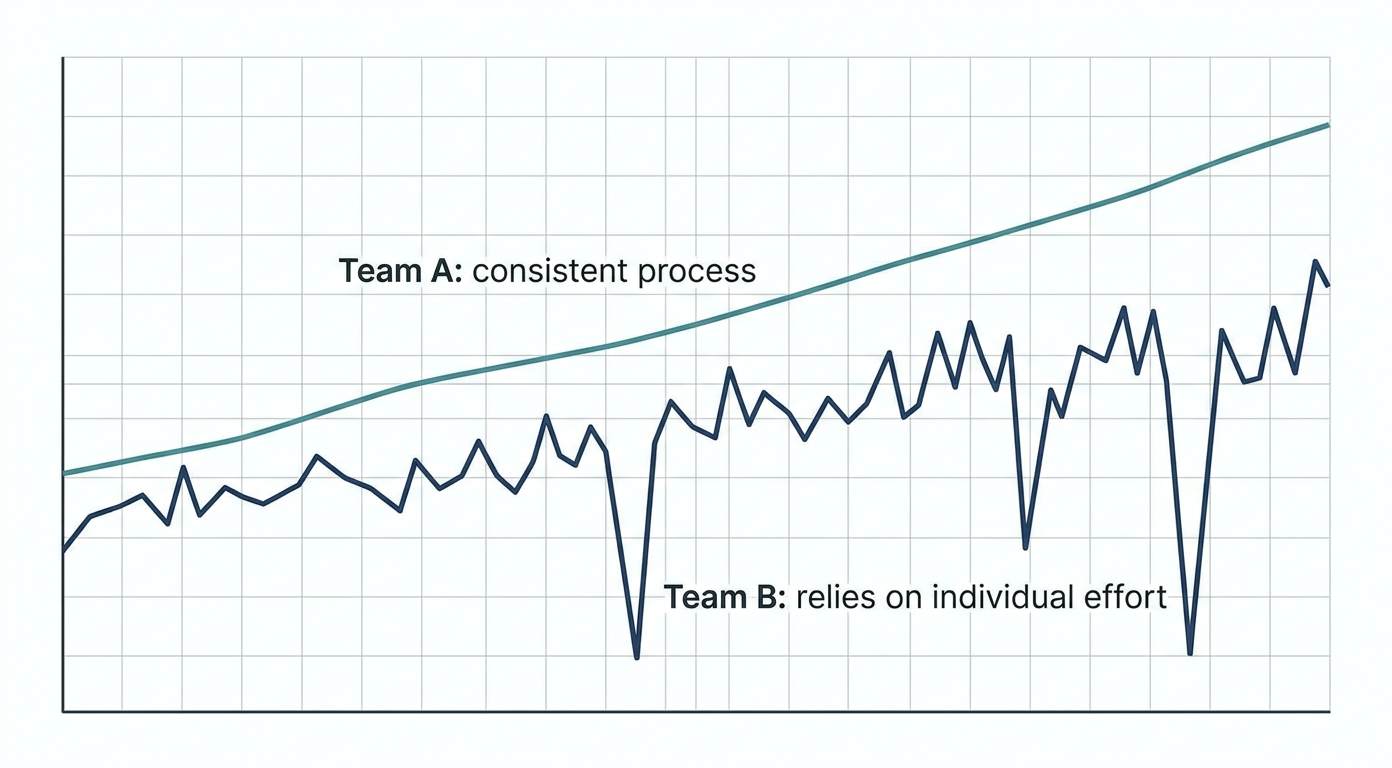
Good process buys an organization three things that heroics structurally cannot provide. First, consistency: the same category of mistake gets caught the same way every time, regardless of which engineer is working that day, whether they're well-rested, or whether they're new to the team. Second, visibility: a defined process creates natural checkpoints where the state of the work becomes visible to people who weren't in the room when the code was written, such as a code reviewer, a QA engineer, or a security reviewer, each of whom brings a different lens than the original author had. Third, and most underrated, process creates institutional memory: when a mistake happens once and the process is updated to catch that category of mistake going forward, the lesson survives even after the person who learned it moves to a different team or a different company.
A team that regularly needs a hero to save a release is a team whose process has already failed.
There's also a quieter human cost to a hero-dependent culture that's worth naming directly: it's exhausting, and it's not sustainable. The engineer who catches the critical bug at 2 a.m. before a release gets celebrated in the moment, but that celebration obscures the fact that they've effectively become a single point of failure the organization now depends on. When that person eventually burns out, moves to another team, or simply takes a vacation at the wrong time, the gap they were quietly filling becomes visible all at once, usually in the worst possible circumstances. A culture that rewards heroics without also investing in the process that would make heroics unnecessary isn't just operationally fragile: it's setting up its most capable people for exactly the kind of burnout that eventually costs the organization the very people it was relying on most.
The specific failure modes process prevents
It's worth being concrete about what actually goes wrong when process is thin or absent, because the abstract argument for process is less persuasive than the specific failure modes it prevents. Without a defined code review process, quality becomes dependent on whichever reviewer happens to be available, with wildly inconsistent scrutiny from one pull request to the next. Without a defined testing process, coverage becomes a matter of individual discipline rather than a shared, enforced bar; some parts of a codebase end up thoroughly tested because one engineer cared, and other parts end up completely untested because nobody happened to prioritize it under deadline pressure.
Without a defined deployment process, releases become fragile, one-off events that depend on tribal knowledge: the specific sequence of manual steps that only two people on the team actually remember correctly. And without a defined incident response process, a production issue becomes a scramble where the first ten minutes are spent figuring out who should even be involved, rather than actually diagnosing and fixing the problem. Every one of these gaps looks, in the moment, like a minor inefficiency. Compounded across a team and across time, they're exactly what produces the chaotic, hero-dependent engineering culture this post opened with.
Process that scales with the team, not against it
The best engineering processes I've seen share a trait that's easy to miss: they're proportionate to the risk of what they're governing, not applied uniformly regardless of stakes. A one-line documentation fix doesn't need the same review rigor as a change to an authentication system. A small internal tool doesn't need the same deployment ceremony as a customer-facing production service. Process that fails to scale down for low-risk changes becomes exactly the kind of bureaucratic friction that gives 'process' its bad name, and predictably, teams start finding ways to route around it, which defeats the entire purpose.
This is why the healthiest teams treat process as something to actively maintain and revise, not something written once and enforced forever unchanged. When a step in the process consistently gets skipped or resented, that's a signal worth investigating; sometimes it means the step is genuinely unnecessary and should be removed, and sometimes it means the step is necessary but poorly designed and needs to be made lighter-weight or better integrated into the existing workflow. A process that nobody questions or revises is usually a process slowly drifting out of sync with how the team actually works, which is its own quiet failure mode.
- Process buys consistency, visibility, and institutional memory: three things individual heroics structurally cannot provide
- The absence of process doesn't remove risk, it just makes risk dependent on who happens to be paying attention that day
- Scale process to the risk of the change: uniform heavyweight process on low-risk work breeds resentment and workarounds
- Treat process as a living thing to revise, not a rulebook written once and enforced unchanged forever
Introducing process without killing morale
A common and understandable fear, especially on teams that have historically moved fast with minimal structure, is that adding process will slow everything down and drain the energy that made the team effective in the first place. This fear isn't irrational; badly introduced process absolutely can do that. The teams that introduce process successfully tend to follow a similar pattern: they start with the smallest process that addresses a real, specifically-felt pain point, rather than importing a comprehensive framework wholesale from a book or a different company's engineering blog. A team that just experienced a painful production incident caused by an untested change is far more receptive to a lightweight required-testing checklist than a team being told, in the abstract, that testing is important.
The other pattern worth naming is that successful process changes usually come with a visible owner who treats the process as a living tool they're responsible for improving, not a rule they're responsible for enforcing rigidly. When a process step causes friction, that owner's job is to ask why and adjust, not to insist on compliance regardless of the cost. This distinction, process as a tool the team owns together, versus process as a rule imposed from outside, is, in my experience, the single biggest predictor of whether a new process gets adopted willingly or quietly resented and worked around. Morale doesn't suffer from process itself; it suffers from process that feels imposed, unresponsive, and disconnected from the actual problems the team is experiencing.
Knowing whether your process is actually working
It's not enough to introduce a process and assume it's providing value forever afterward; process needs the same kind of feedback loop that any other engineering practice does. Some of the most useful signals are quantitative: how often does a bug reach production that a defined testing stage should have caught? How long does a typical code review take, and is that time trending up in a way that suggests reviewers are overloaded or the process has become a bottleneck? How often does an exception get granted to skip a required step, and is that becoming the norm rather than the rare exception it's supposed to be?
Just as useful, and often overlooked, are the qualitative signals that show up in how people talk about the process day to day, whether engineers describe a step as protecting them from mistakes, or as an obstacle they route around whenever they can get away with it. A retrospective that asks, honestly and without defensiveness, 'is this part of our process still earning its keep' is one of the highest-value recurring conversations an engineering team can have, and it's a conversation that should happen periodically for every significant process a team maintains, not just once when the process is first introduced and then never revisited again.
Where process and security actually meet
It's worth drawing the direct line back to security, since it's easy to discuss 'process' as a purely productivity-oriented concern. Nearly every serious security failure I've read a postmortem on had, somewhere in its root-cause chain, a process gap rather than purely a technical one: a code review that didn't happen because the deadline was tight, a security scan that was skipped because the pipeline step was optional rather than required, a patch that sat unapplied because no one owned the decision to prioritize it. The technical vulnerability is usually the proximate cause. The process gap that let it ship, or let it sit unpatched, is usually the deeper one.
This is the throughline for the rest of this series. Input validation and vulnerability management, covered in the previous two posts, are technical disciplines, but whether they get applied consistently, across an entire team and an entire codebase, is a process question. A brilliant engineer who deeply understands input validation doesn't help a codebase that has no enforced review process requiring that discipline from everyone else on the team. Process is what turns individual expertise into an organizational property, and that transformation, from what one skilled person knows to what an entire system reliably does, is, in my experience, the single highest-leverage investment an engineering organization can make.
Coming up next: The Overlooked Power of Project Management: why the discipline that keeps a project organized is also, quietly, a security and quality discipline.
Related posts
Compounding Discipline: How It All Reinforces Itself
Why security, process, and planning don't work as well in isolation as they do together
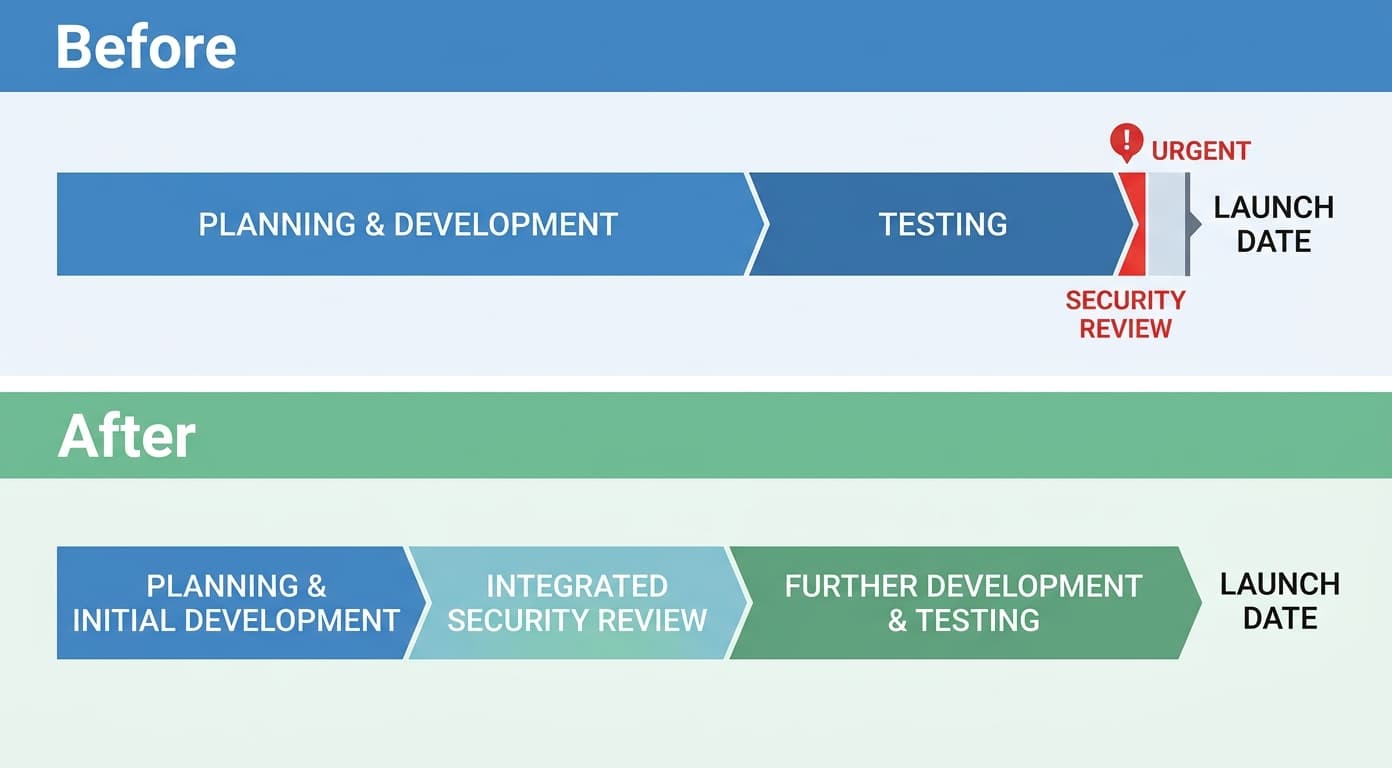
The Overlooked Power of Project Management in Engineering
Why the discipline that keeps a project organized is, quietly, also a security and quality discipline

Why Cybersecurity Actually Matters
Beyond the headlines: what's really at stake, and why it's everyone's job, not just the security team's
The Discipline of Input Validation
Why trusting input is how systems break, and why validation is the cheapest security control you'll ever implement
Vulnerability Management: Find It, Prioritize It, Patch It
A practical look at the unglamorous discipline that decides whether known flaws get fixed before or after they're exploited
Comments
No comments yet. Be the first.